Many people do not revisit their estate plans once it has been created, but changes in circumstances mean that it’s time to pull it out and make changes. Death of a spouse, divorce, remarriage, birth of a disabled grandchildren, are some of the triggers.

Keep your beneficiary elections updated. These designations supersede your will or Trust. A first step for anyone who’s gone through a divorce is to check the beneficiary designations on retirement and other financial accounts. A lot of people walk away from their spouse, but never do any of the clean-up work.

Bottom Line. While it may seem easy to put off doing your initial estate planning or updating your planning until later, it’s the most important way you can protect your assets during your life and pass them along to those you care about. Final Wishes are just that – wishes. You need legally enforceable documents to ensure your wishes will be carried out.

Call the Law Office of Debra G. Simms for a free initial consultation.


If you are now a Florida resident and your estate planning documents were prepared in another State, there are many potential problems.

  • Your out of state Will might not be admissible in a Florida Probate.  If your Will is not “self-proving” (meaning that there is an affidavit stating that you signed your Will in front of the witnesses and a notary all at the same time), then a Florida Probate Judge might not admit the Will without further proof that the Will is authentic.  This adds cost and delay to the probate process.


  • Your out of state Will might name a Personal Representative (sometimes called an Executor) who is not a qualified person under Florida Law.  In Florida, the Personal Representative must either be a relative or a resident of Florida.  If you have not named a qualified successor Personal Representative, this could create conflict with your heirs and would certainly add cost and delay to the probate process.


  • Your revocable living trust might hold Florida real estate.  If that real estate is your homestead, your trust must contain certain language addressing Florida Homestead requirements.  You do not need a new trust, but might very well need to add an amendment to your existing trust.


  • Your out of state Power of Attorney and Medical Directive might not comply with Florida Statutes.  This could create issues and delay when dealing with Florida banks, government agencies, health care providers, etc.  It is best to have Florida specific powers of attorney, especially if you become incapable of handling your own affairs.


Answer these 7 simple questions to find out!

  1. Have you prepared a Will or Trust?

If you do not have a will, the State of Florida will determine how your assets will pass.  This could have potentially undesired results!

  1. If you have done a Will or Trust, has it been reviewed in the last 2 years?

You may have experienced family or financial changes since your plan was prepared.  In addition, the laws in Florida may have changed which affect your particular planning documents.  For example, Florida recently passed legislation allowing representatives to access and control online accounts and digital assets.  Since most people use the internet for banking, social media, and emails, it is important to have specific language in your documents that gives this authority to your representatives.

An out-of-date estate plan perhaps is worse than no estate plan at all.  Think of estate planning as a process, not an event.

  1. Does your current plan provide your heirs with asset protection, divorce protection, and lawsuit protection?

Under Florida law, children and grandchildren can inherit property at age 18 without restriction.  Proper planning is crucial to prevent an heir from squandering his or her inheritance.  Are the distributions to your children protected from their creditors and divorce?

  1. Do you only have a Will and not a Living Trust?

Many of your assets could be subject to Probate proceedings.  Probates are costly and require many months to conclude.  A properly funded Living Trust is an excellent way to avoid Probate.

  1. Should your decision makers be changed?

Over time, many people change their minds about who is best suited to be their personal representatives, trustees, and health decision makers.  Or the people designated in the original documents may have moved, died, become ill, or grown distant.  You should also consider naming successors to act as back-up.

  1. Is this your only marriage?

Second or subsequent marriages present unique planning issues, particularly if both have children from a prior marriage.  Proper planning is critical to prevent undesired results.

  1. Do you have assets titled jointly with a child or children, or someone else?

Holding assets jointly with someone else other than a spouse is quite common, but has some potentially devastating consequences of which most people are unaware.  In Florida, a creditor of a joint tenant can claim the asset!  A creditor would include a divorcing spouse, judgment creditor, or business creditor.  Additionally, problems can be created if joint tenants die in the wrong order.  There are better ways to allow your children to access your accounts.

Please contact the Law Office of Debra G. Simms for your free estate planning consult.  Don’t wait until it’s too late!

As we approach the end of 2017, it is a good time to take stock of the past year and plan for the future.  On the one hand, the economy is improving – the U.S. stock market is at an all-time high, unemployment is low, and consumers are spending money.  On the other hand, we are experiencing a political climate which has polarized our country.

In light of our country’s state of affairs, many Americans feel unsure about the future.  However, as Benjamin Franklin quoted- there are only two certainties in life- death and taxes!  My law firm is here to help you plan for both.  Here are some areas of interest that might have application to your estate planning.

Consider having an end-of-year family meeting.  Family meetings can help you coordinate financial and other estate planning matters and can be a valuable learning experience for children and grandchildren. Communicate the location and your intention or your estate planning documents.  Documents should be placed somewhere safe and easily accessible to the individuals you have named to handle your affairs.

Review your estate plan.  Take a look at your Will and/or Trust to ensure that you remain comfortable with bequests, personal representatives, trustees, and guardians.  Review your agents named under financial and medical powers of attorney to ensure they are still appropriate.  Review living wills to make sure you are comfortable with your end-of-life instructions.  If your documents are more than 5 years old, consult with an attorney about the advisability of executing new documents.  Recent legislation has changed some of the legal requirements for Durable Powers of Attorney, for example.

Review your insurance portfolio.  Consult with a qualified professional to determine whether or not your current life, long-term care and liability insurance continue to efficiently meet your coverage needs.

Review your beneficiary designations.  Make sure your life insurance and retirement plan assets will pass to according to your wishes.  Likewise, evaluate with your attorney the titling of your other assets to ensure they too, are distributed according to your objectives and are coordinated with your estate plan.

Charitable Planning.  In order to obtain an income tax charitable deduction for 2017, gifts must be made by December 31st.  In the case of a gift of tangible property in excess of $5,000, an appraisal will be required so you should start the process as soon as possible.  Make sure to obtain a receipt for any gifts in excess of $250 before filing your tax return.  A cancelled check may not meet the IRS requirements.

Planning for Disabled Beneficiaries.  Congress recently passed legislation to establish ABLE accounts for individuals diagnosed with significant disabilities before age 26.  You can invest cash contributions on a tax-free basis and the beneficiary will not have to forfeit certain public benefits.  You should also talk to an attorney to determine whether assets left to a disabled beneficiary must be placed in a Special Needs Trust.

Review your investment portfolio.  The end of the year is an excellent time to re-evaluate the goals of your portfolio, your risk tolerance, and the liquidity needs that will influence the next several years of your financial life.  Discuss your concerns with a Financial Advisor.  Ask your Financial Advisor and your attorney to make sure your investment goals and your estate planning goals work together, and consider having a conference with both advisors.

At the Law Office of Debra G. Simms, we are always available to help you evaluate your planning objectives and make sure your goals will be achieved.  Please contact us with any questions and concerns.

Wishing all a very Happy and Healthy Holiday season!

Greater Daytona Area Estate Planning Attorney

If you are a resident of the Daytona area or of Port Orange or of Volusia County or anywhere in the surrounding areas and need estate planning, look no further. There are plenty of registered law firms in these areas who can advise you regarding estate planning.

Daytona Beach Estate lawyerEstate planning is a way of ensuring that your family is taken care of and provided for even after you are gone. Simply put, it is the legal term used for planning what to do with your assets, property and other valuable belongings after your death.

The earlier you do the planning, the better it is. You would like to be in sound health and mind when you are doing it. You also get to decide who gets what. Properly planning an estate will take care of your taxes as well. Here is a beginner’s guide to estate planning.

Drafting and processing a will

You have to be very thorough when planning your will. A will must cover all your possessions and all sorts of bank and other accounts. Your pension or retirement account should have the name and information of the beneficiary and all other legalities sorted out. Your will should mention clearly who inherits what and how much allowance anyone receives.

A guardian or guardians will have to be appointed for your minor children (if there are any). If your children are too young, you will have to create a trust so that they do not get their share of the entire amount of money or property you are leaving behind for them. A trust ensures that your children continue to receive their inheritance in certain amounts till they reach adulthood or a certain age.

A will has to go through the probate process before it can be executed. The process involves the reading of the will and the time taken to hand over the inheritance to the appointed heirs. The time taken to complete this process can last between 6 months and a year.

Trusts

The probate process of the will can be avoided by creating a living trust. Trusts can have assets as well as money. Trusts take proper care of your estate till they are handed over. Different types of trusts can be created after the name of individual beneficiaries. You can have charitable trusts as well.

Taxes

You need to pay taxes for your planned estate as well. But taxes are not levied on all estates. If your estate is taxable, the taxes should begin to be paid 9 months after your death. But estate taxes keep on changing depending on the government’s policies. You should plan properly with your lawyer regarding ways of minimizing taxes and protecting your assets from taxation. Proper ways of meeting tax demands should also be mapped out.

If you are a resident of greater Daytona and need help regarding estate planning or understanding the laws related to it, do not hesitate to contact an estate planning lawyer in your area today.

To contact Florida attorney Debra G. Simms, P.A. in Port Orange or New Smyrna Beach, FL please call 877.447.4667.

Will vs Trust?

Most of us are aware of the terms ‘will’ and ‘trust’ as legal devices used to pass on your assets and property to your heir or beneficiaries. Both will and trust, are estate planning tools meant for distribution of property among beneficiaries. However, the chief difference between the two is that whereas a will comes into effect only when you die, the trust becomes effective as soon as it is created.

What is a will?

Florida Will lawyerA will is a legal document, created and signed by an individual, in the presence of witnesses, which lays guidelines for his property’s distribution after his death. It helps you define the details of your assets and name the beneficiaries whom you wish to benefit from them. The will also offers you the freedom to choose an executor who would manage the allocation of your assets and property after your demise. In the event of the absence of a will, the court has the right to appoint and administrator who would take charge of the distribution of our property. The will also allows you to specify a guardian to raise your children after your death. It is advisable to make a will for your children even if you are still a young parent. It helps appoint a guardian for them in the event of your untimely death, when they are still minors.

If a person dies without creating a will, he is said to have died ‘intestate’. In such cases the court decides upon the beneficiaries for the property and how it will be distributed among them as per the state laws. If an individual, who has already written down a will, is mentally or physically incapable of supervising his financial assets, the court has the right to appoint a guardian who would take charge of managing it for him.

After the death of an individual, his will is administered through a probate proceeding established by the state laws. The probate is a set of laws and proceedings that governs the procedure of execution of the will with the help of a lawyer or an attorney.

What is a trust?

It is a legal device, wherein an individual or a company is named as a trustee that takes care of, and manages the assets for the beneficiary. A trust mainly comprises of three parties namely the grantor, the trustee and the beneficiary. The grantor is the person who creates the trust for his own property and assets. A trustee holds and supervises the property for the grantor for the benefit of the beneficiaries. The beneficiary is the one that gets the benefits of the trust created by the grantor. Some states offer the provision to the grantor of naming himself as the trustee.

Unlike a will, the trust does not require to be administered through the probate process. In addition to this, if the grantor is unable to manage his assets, the trustee has complete right over its supervision without the involvement of court.

There are plenty of Law Firms in Florida that provide sound legal advice on the laws applicable to these will and trusts. If you live in in Volusia County, New Smyrna Beach, Port Orange, Daytona and surrounding areas, and are looking for legal solutions you may check out the website https://simmslawfirm.com/.

To contact Florida attorney Debra G. Simms, P.A. in Port Orange or New Smyrna Beach, FL please call 877.447.4667.

Florida Probate Law

FL Probate LawThe probate is a process supervised by the court, which deals with transferring the property of the deceased to its legal heir. As per law, the assets are first used to pay the expenses of the probate proceedings, then to pay off any outstanding debts on the decedent and the balance is then distributed among his heirs or beneficiaries.

The probate process varies from state to state. Florida too has its specific probate rules that define the guidelines for the process in the state. There are three ways in which you can file a probate in the state of Florida.

Transferring assets without probate

In case the deceased left behind a very small fortune, the beneficiaries are allowed to inherit the property without any probate proceedings. If the beneficiary has paid all of the final expenses of the decedent such as final illness and funeral costs, he has the right to get reimbursed for the same from the deceased property, provided the two qualifications are met:

  • The decedent’s property does not involve any real estate.
  • The fortune left by the deceased is not being claimed by the creditors for paying of any outstanding debts and is not exceeding the amount of the final expenses paid by the beneficiary.

To avail the reimbursement, the beneficiary is required to fill a ‘Disposition of Personal Property without Administration’ form that is available on the websites of several circuit courts of Florida. You are also required to submit itemized receipts and bills corresponding to the medical expenses that you have made in the final 6 months of the decedents life and also for his funeral.

Transferring assets by Summary Administration

The beneficiary is qualified for this type of probate, if the decedent had died at least two years back or the value of the probate estate (excluding the non probate property) is not more than $75,000.  The non probate property can be distinguished as:

  • Assets that are attributed to a living trust.
  • Property jointly held by a couple, such as a joint savings account, or a house that had shared tenancy by both of them.
  • An asset that has already been designated to the beneficiary for example a life insurance policy.

The law requires the beneficiary to fill up a ‘Petition for Summary Administration’ form and testify that there are no outstanding debts against the property.

Transferring assets through Formal Administration

A regular probate proceeding involves the beneficiary filing a claim petition to the deceased property, in the local circuit court. The court issues ‘Letters of Administration’ to the representative of the estate. The Florida probate rules state that the beneficiary is also required to hire a lawyer or an attorney unless he is the one and only beneficiary of the property. The property is then distributed as per the clauses in the will left by the decedent. However, in the event of the absence of a will, the Florida intestacy law has the right to determine how the property would be distributed among the beneficiaries.

Florida as a state has also set out statutory fee scales for the lawyers involved in the proceedings of a probate, making it easier for the people to estimate the legal expenses of such a proceeding. For proficient legal advice in Volusia County, New Smyrna Beach, Port Orange, Daytona and surrounding areas, visit https://simmslawfirm.com/.

To contact Florida attorney Debra G. Simms, P.A. in Port Orange or New Smyrna Beach, FL please call 877.447.4667.

Florida Probate Law

The state of the Florida does not necessary require you to hire a probate lawyer for the legal proceedings of the decedent’s property distribution. Probating a will is a task that requires a huge amount of paperwork or administrative litigation which is best left for a lawyer or an attorney to handle. The dual task of validating and executing a will, is quite complex in terms of legalities and might not be feasible for a layman to deal with. It is therefore advised that you hire a probate lawyer for handling the legal proceeding of a probate will.

Proving the validity of a will

Florida Probate LawyerIn most states, the will filed with an affidavit notarized by the witnesses, is termed as ‘self proving’ and does not require a lot of legal guidance from a lawyer. However in some cases, the adequacy of the will may be questionable as per the state laws. The state laws along with the Uniform Probate Code, specifies the baseline criteria for the framework and content of the probate will. They also lay down the guidelines for adequacy of the witnesses provided for the will. The law also specifies that a more recent will would always be considered over its older version. If the beneficiary encounters any such disputes regarding the validity of the probate will, it is advisable for him to take up the case with a probate lawyer.

Complex family or financial situations

In some cases there are considerable family disputes with reference to the will of a decedent that may lead to expensive lawsuits and court battles. It is always tactical to hire a probate lawyer to deal with such disagreements and prevent any legal wars in the family. There might be some other complex situations in the family too, that might require you to take the help of a lawyer. Some of the family complexities might be a second marriage, a disabled family member, minor children, a recent divorce, or a spouse’s demise. There might also be financial situations that might require you to hire a lawyer for example, a taxable estate or property in more than one state. Given such circumstances, it is always judicious to acquire legal guidance from a probate lawyer who would know the legalities in and out.

Administration of the will

The most important part of a probate will is its adequate execution and property allocation as per the instructions laid down in it. In some cases, if the property left by the deceased is nominal or held in joint tenancy with the beneficiary, the will can be executed without probate. However, there might be cases where the estate is extensive and extremely complicated in legal terms. For example, the property might be a combination of commercial real estate or a running business. In such cases, it is always helpful to take legal aid from the experts.

It is not mandatory for you to hire probate lawyers for your will proceedings. However, to avoid any future hassles or disputes, you are advised to take legal consultation for dealing with the complexities of the litigation involved.

If you are looking for extremely competent and proficient Law firms in Volusia County, New Smyrna Beach, Port Orange, Daytona and surrounding areas you may check out the website https://simmslawfirm.com/

To contact Florida attorney Debra G. Simms, P.A. in Port Orange or New Smyrna Beach, FL please call 877.447.4667.

Preparing your Will

Preparing a will is a wise and thoughtful decision. It gives your loved ones a clear idea of what should happen to your assets and how you have decided the inheritance. But there are certain deliberations to make before drafting one. Here are 5 things to consider when preparing your will.

  1. Hire the right people

It may be economical to prepare your will without the help of a lawyer. There are numerous websites which allow you to easily fill out the details of how your assets should be dealt with. These sites usually offer a generic solution to creating your will without taking into consideration state-specific nuances in laws. They also do not offer solutions to users about how these laws work. Therefore, it is always wise to consult an attorney from a reputed law firm who is able to guide you through the entire process of preparing a will for a nominal fee. By doing so, you can avoid making mistakes which could cost your family a pretty penny.

  1. Consider all the assets you own, irrespective of what they are

While estate, inheritance, and finances should take up a significant amount of your will, there are other, less significant but relevant assets which should not be ignored. Non-traditional properties include digital assets such as social media account username and passwords and website or domain names. Understanding what you own is important to decide inheritance. If you do not maintain a detailed list of your assets, it may lead to a lot of conflict and confusion during the execution.

  1. Select executors, trustees, and guardians with care

A guardian (or guardians) should be named for your children, if minors, who will oversee their well-being suitably. Putting your child in the custody of the state is not something you want. A trustee, on the other hand, is responsible for the child’s assets, not the child itself. It is advisable not to decide on the same person as a legal guardian and trustee.

Selecting the right people who will be responsible for executing the terms of the will requires some serious thought. When you are preparing the will, ensure you provide their full names and addresses to your lawyer.

  1. Review beneficiary designations

Personal insurance, financial accounts, retirement bonds, IRAs, and annuities are verified separately. The beneficiaries of these accounts receive funds through a document called a beneficiary designation. These designations take priority over instructions mentioned in your will. By reviewing beneficiaries periodically, you can be assured your assets will be distributed among the right people.

  1. Joint assets

If a property or bank account is under joint ownership, that asset will not be distributed under the clauses in the will. It will instead be passed on to the surviving owner(s). In case the asset is solely in your name, it will be subject to conditions mentioned in the will. Tenancy, where multiple owners own a percentage of the asset, is also considered during the execution of a will. Here, the surviving owner(s) are not given your percentage of the asset. It will follow the course of action stated in the will.

Circumstances and laws change quite often and your will should be updated accordingly. Ensure you review the will every year with your attorney and make changes to reflect current situations.

Is your estate planning up to date?

If you are looking for legal services in Volusia County, New Smyrna Beach, Port Orange, Daytona, and surrounding areas, consult the offices of Debra G Simms.

To contact attorney Debra G. Simms, P.A. in Port Orange or New Smyrna Beach, FL please call 877.447.4667.
Family Law

Family is the most essential entity in the life of a person. Laws pertaining to this indispensable entity are crucial and sensitive. From property disputes to divorce and child custody, the metropolitan families are plagued by a plethora of issues. The American state family law is intricate and exhaustive, addressing the everyday issues interwoven with the familial ties of its residents. It is essential for its citizens to be aware of the details regarding these various issues. As we walk you through the essentials of family law, your queries about the same will be addressed.

Family law comprises of a large number of statutes that aids various legal matters called codes. The prevalence of these codes such as family code, domestic relations code, marital and children’s code is very essential for taking effective legal decisions.

Lawyers specializing in various issues like elder law, probate, guardianship and family planning are available to serve the public in Volusia County, New Smyrna Beach, Port Orange and Daytona.

Marriage-laws

With lifestyle changes, one of the major issues that is encountered by many is the dissolution of marriages. It is a sensitive issue that requires to be handled with extreme care and caution. The state marital law in America is comprehensive with provision for no-fault divorce as well as fault-divorce based on abandonment, cruelty and others. The state law also specifies that marriage is considered void if either party are not eligible, or are mentally unsound.

Child support and custody

With the rising divorce rate, related issues like child custody and support come into play. Joint and sole custody are offered to parents in case of divorce. In most scenarios, one parent is not given prevalence over the other. But under unique circumstances, the law – “Tender Years Doctrine” – enables the court to give custody to the mother. In these situations the court rules in the favor of the mother because it considers the child’s future to be more secure.  Child support is equally important if both the parents do not have legal custody. It is the minimum amount that the non-possessory parent should provide to the possessory parent to secure the child’s future. Matters like health insurance and life insurance are also to be considered under this law. Child support is usually terminated post the child turns 18.

Domestic violence

In the recent times domestic violence is no longer uncommon in society. Many are forced to deal with the evils of domestic violence. It not only includes harassment of adults but also child abuse. Protective orders are issued by the court in these scenarios. Statute laws are also available that enable law enforcement agencies to ensure that court orders are being followed. Laws are also available that enable medical professionals to report domestic violence to authorities. Each state has specific protocol to deal with child abuse and neglect.

Estate planning

Irrespective of being wealthy or poor, planning about one’s property is of paramount importance. Various tools like wills, trusts, powers of attorney, healthcare directive, living wills,  unmarried or same sex partner planning and others are available to safeguard one’s rights.

Elder-law

Old age and disability necessitates the existence of the Elder law. Elder-law -planning, helps people deal with various problems regarding property management. Issues such as the status of assets if one of the spouses require long term care or is incapacitated and others are dealt with. These laws help the old and those dealing with disabilities effectively manage their property issues.

Family law is a state issue. The codes and statutes are unique to every state in America. It is essential for every citizen to be aware of these various laws to enrich their quality of life.

To contact attorney Debra G. Simms, P.A. in Port Orange or New Smyrna Beach, FL please call 877.447.4667.
Contact Us

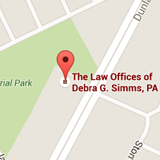
Port Orange Office:
Prestige Executive Center
823 Dunlawton Ave. Unit C
Port Orange, FL 32129
Local: 386.256.4882