CONSIDER CHARITABLE CHOICES IN YOUR ESTATE PLANNING

As part of your estate planning, you might want to consider making a gift to one or more of your favorite charities in your Will or Trust.  This is what is known as “Planned Giving”.

Depending on the type of gift you choose, you may potentially reap benefits from your philanthropy that have very practical and desirable outcomes, such as the following:

  • Ability to leave a legacy
  • Income tax benefits
  • A life income for you or your spouse
  • Reduce or eliminate capital gains taxes
  • Personal Satisfaction

Whatever your objective, an estate planning attorney can help you choose the right tool to provide the most benefits for you, your family, and your charity.

Questions? The Law Office of Debra Simms is here to help. Call us today 386.256.4882

This blog post is not case-specific and is provided only for educational purposes and is not intended to provide specific legal advice. Blog topics may or may not be updated and entries may be out-of-date at the time you view them.
Are you registered to vote?

The primary election of August 28th is rapidly approaching.  The deadline to register for this election is July 30th.

If you are at least 18, a citizen of the United States, and a resident of Florida, you can register to vote.  It’s easy to register to vote:  you can do so online at: https://registertovoteflorida.gov/en/Registration/Index

After you register to vote, you will be notified of your voting precinct and the location of the place you are to vote.  If you are not able to get to your voting precinct, contact the local supervisor of elections to obtain an absentee ballot so you can mail in your vote.

The purpose of primary elections is to select a candidate to represent the political party in the general elections.  In the primary, if a candidate wins more than 50 percent of the vote then the race is over.  That is why the primary is so important. EVERY SINGLE VOTE COUNTS!

Recent Court Decision is a Reminder to Carefully Plan Your Estate

The case involved a widow (the second wife) and the children form the first marriage.  The decedent had executed a Will in 2005 and another Will in 2010 that gave most of the assets to his second wife.

The daughter sued the widow claiming she had exerted “undue influence” on the frail father and thus interfered with the daughter’s expected inheritance under the first Will.  The daughter asked the Florida Probate Court to invalidate the 2010 Will and distribute assets to the children based on the 2005 Will.

After winding through the Courts, a Florida appellate court found in favor of the widow and probated the 2010 Will.  The case was in court for 7 years!

As this prolonged dispute shows, estate matters can be complicated even when there is a written Will.  Estate Planning involves several important considerations; “blended families” pose special challenges. Competent legal advice is based upon the specific circumstances.

Questions? The Law Office of Debra Simms is here to help. Call us today 386.256.4882

This blog post is not case-specific and is provided only for educational purposes and is not intended to provide specific legal advice. Blog topics may or may not be updated and entries may be out-of-date at the time you view them.

Estate Planning and the New Tax Act

Many of my clients have been asking me if they need to re-evaluate their estate plans in response to the changes in the tax law, the “Tax Cuts and Jobs Act of 2017”.

The Tax Act addresses personal, business, and estate tax planning taxes.  Here is some specific information that concerns estates.

The Estate Tax:

The federal estate tax is a 40% tax imposed on an individual’s assets which are transferred upon death.  The United States has had a version of the estate tax since 1916.  This tax applies to the gross estate – ALL of a decedent’s assets, no matter the character or value, passing upon death to beneficiaries, trusts, heirs, and non-charitable entities.  This would even include life insurance proceeds, not something individuals usually think of as part of their estate.

The new Tax Act significantly changes the tax exemption amounts for those who die after December 31, 2017.  The estate tax exemption has increased to an inflation-adjusted amount of $10 million per individual or $20 million for married couples. For tax year 2018, the IRS has calculated this to be $11.18 million and $22.36 million, respectively.  The Tax Act has effectively doubled the amount of assets that an individual can transfer free from federal tax upon death.

Responding to the Tax Act:

Many individuals who have estate plans drafted in prior years (in the year 2001, for example, the exemption amount was only $675,000) have formula clauses in their Wills and Revocable Trusts.  Such formulas were used to control what goes where at the time of death to maximize the exemption amount.  A typical formula says what amount goes to the spouse, and what amount goes to the children or grandchildren.  Upon death, this directive is usually irrevocable.

If you have a formula clause in your documents, it is time for a review to determine if this formula will achieve your goals.  It is quite possible, that given the current tax environment, a formula clause could give your spouse far less than you intend.

Questions? The Law Office of Debra Simms is here to help. Call us today 386.256.4882

This blog post is not case-specific and is provided only for educational purposes and is not intended to provide specific legal advice. Blog topics may or may not be updated and entries may be out-of-date at the time you view them.

Don’t Let Fate Determine Your Estate!

Many folks think that Estate Planning is just for the wealthy.  But, think again.  Everyone has an “estate” worth planning for- some are just more complicated than others.  No matter how much money you have, ignoring the inevitable and failing to plan can lead to a lot of conflict and expense for your loved ones.

And estate planning isn’t just about making a Will to direct who will receive your money when you no longer need it.  An important overlooked aspect of estate planning is incapacity issues:  who will make decisions and handle your finances if you cannot?

If you become incapacitated, who would make decisions on your behalf? If you are married, you would probably think that it is your spouse.  If you are a young adult living at home, you would probably guess it’s your parents.  Neither is correct.

On your 18th birthday, you are considered an adult in Florida and are responsible for making your own decisions.  Your parents can’t legally act on your behalf.  And if you are married, your spouse doesn’t automatically get to make personal and financial decisions on your behalf in the event of incapacity.  If you do not have a valid durable power of attorney, then a court process involving at least two lawyers is required to appoint a guardian to make such decisions for you under the supervision of the Court.  This can be expensive and an invasion of privacy.

Questions? The Law Office of Debra Simms is here to help. Call us today 386.256.4882

This blog post is not case-specific and is provided only for educational purposes and is not intended to provide specific legal advice. Blog topics may or may not be updated and entries may be out-of-date at the time you view them.


Consider this recent headline:

“Americans in 26 states are struggling with heat warnings and advisories as near triple-digit temperatures smother states from New York to California”.

So, Snowbirds, if it’s getting hot EVERYWHERE in the summer, maybe you ought to just stay put in Florida.  From a legal point of view, consider these advantages of making Florida your home:

  • Florida Homestead. You will receive a reduced property tax rate for your primary residence in Florida.  Additionally, your homestead is pretty much bullet proof from creditor’s claims.  And if you leave your home to a spouse, descendants or certain relatives, they will also receive the benefit of creditor protection on the home.  Also, if you need long-term care and cannot afford it, the state of Florida does not require you to sell your home to pay for your care before you can be eligible for Medicaid.
  • You had a taxable estate in your old home state: Florida does not have state Estate tax.  If your assets are lower than $5.49 million you may not need a lot of tax planning. A Florida attorney can help you create a much simpler plan for after death.

If you do make the move, don’t forget to consult with a Florida Estate Planning attorney or Elder Law attorney. Your Power of Attorney and Will may not be valid in Florida.

Questions? The Law Office of Debra Simms is here to help. Call us today 386.256.4882

This blog post is not case-specific and is provided only for educational purposes and is not intended to provide specific legal advice. Blog topics may or may not be updated and entries may be out-of-date at the time you view them.


Answer these 7 simple questions to find out!

  1. Have you prepared a Will or Trust?

If you do not have a will, the State of Florida will determine how your assets will pass.  This could have potentially undesired results!

  1. If you have done a Will or Trust when was it last reviewed?

Your estate planning documents should be reviewed on an annual basis to be certain that the representatives, agents, trustees, etc. that you have appointed are still appropriate.  You should also review your plan of distribution.  If changes have occurred in your family, financial situation, or your desires, then new provisions may be necessary.   Also, changes in the law do occur, so plans should be periodically reviewed by an estate planning attorney.

An out-of-date estate plan perhaps is worse than no estate plan at all.  Think of estate planning as a process, not an event.

  1. Does your current plan provide your heirs with asset protection, divorce protection, and lawsuit protection?

Under Florida law, children and grandchildren can inherit property at age 18 without restriction.  Proper planning is crucial to prevent an heir from squandering his or her inheritance.  Are the distributions to your children protected from their creditors and divorce?

  1. Do you only have a Will and not a Living Trust?

Many of your assets could be subject to Probate proceedings.  Probates are costly and require many months to conclude.  A properly funded Living Trust is an excellent way to avoid Probate.

  1. Should your decision makers be changed?

Over time, many people change their minds about who is best suited to be their personal representatives, trustees, and health decision makers.  Or the people designated in the original documents may have moved, died, become ill, or grown distant.  You should also consider naming successors to act as back-up.

  1. Is this your only marriage?

Second or subsequent marriages present unique planning issues, particularly if both have children from a prior marriage.  Proper planning is critical to prevent undesired results.

  1. Do you have assets titled jointly with a child or children, or someone else?

Holding assets jointly with someone else other than a spouse is quite common, but has some potentially devastating consequences of which most people are unaware.  In Florida, a creditor of a joint tenant can claim the asset!  A creditor would include a divorcing spouse, judgment creditor, or business creditor.  Additionally, problems can be created if joint tenants die in the wrong order.  There are better ways to allow your children to access your accounts.

Questions? The Law Office of Debra Simms is here to help. Call us today 386.256.4882

This blog post is not case-specific and is provided only for educational purposes and is not intended to provide specific legal advice. Blog topics may or may not be updated and entries may be out-of-date at the time you view them.

Here is a list of quick tips for what to do after you leave the attorney’s office:

  • Keep your original documents in a safe and secure place.
  • Make sure your agent under your Power of Attorney knows where you keep your documents and that he or she has the name of your attorney.
  • Give copies of your Medical Directives to the people you have named in the documents; your Primary Care Physician and other Health Care providers should also have a copy.
  • Discuss your wishes for health care and end of life choices with your chosen agents. Don’t make them guess what you would want.
  • If you have not already done so, consider Pre-paid funeral, burial, or cremation arrangements. It is not only less costly but when the time comes, it will ease the burden for your loved ones who are grieving your loss.

Questions? The Law Office of Debra Simms is here to help. Call us today 386.256.4882

This blog post is not case-specific and is provided only for educational purposes and is not intended to provide specific legal advice. Blog topics may or may not be updated and entries may be out-of-date at the time you view them.

Important Tips for New Florida Residents

Welcome to Florida.  To ease the transition to your new home, below is a checklist of important tasks to complete your move.

  • Driver’s License or ID Card:  Florida requires that you obtain a Florida driver’s license or ID card within 30 days of moving to the state.  To obtain this, there are extensive document requirements: proof of identity, proof of residency, proof of social security number and proof of car insurance. For a new license, you will also need a valid out-of-state license and a vision test is required.  When you get your license, you can also register to vote.
  • Property Tax: If you purchase real estate, the new ownership information will be automatically updated on the tax roll after the deed is recorded.  You should check your eligibility to file for any exemptions with the Property Appraiser.
  • Vehicle Title and Registration: Florida law requires a vehicle to be registered within 10 days after the owner establishes residency. You will need the current title to register and title your vehicle. If your title is being held by a lender, you must provide your registration.  You must present proof of insurance.  The vehicle VIN number must also be verified; therefore, you must bring the vehicle with you.
  • Boats: Florida titles and registers most vessels.  You must present your registration from your old state.
  • Hunting and Fishing: To hunt or fish, you may be required to obtain a license. If you already have a license, your address will be changed when you update your driver’s license.
  • Tourist Tax: If you purchase a property for 6 months or less, you must register to pay the Tourist Development Tax.  If your property is rented for 1 month or less, you will also have to pay the Business Tax.
  • Update your Estate Planning documents: If you have a Will, Power of Attorney, Health Care Directive, or Living Will from another state,  the documents might not be effective in Florida.  See a Florida Estate Planning or Elder Law attorney for a consultation and bring along your documents for review.

Questions? The Law Office of Debra Simms is here to help. Call us today 386.256.4882

This blog post is not case-specific and is provided only for educational purposes and is not intended to provide specific legal advice. Blog topics may or may not be updated and entries may be out-of-date at the time you view them.


A Dementia Living Will is specifically designed to address advance care planning in cases of dementia.  In order to be effective, the document must be combined with a Designation of Advance Healthcare Surrogate and a Living Will.

For many people with dementia, there can be a number of years between losing the ability to make medical decisions and the point at which a living will would take effect.  Multiple medical issues can occur during those years, and a lack of information leaves your healthcare surrogates unprepared.

The purpose of the Dementia Living Will is to provide information to your health care surrogate in case you develop dementia.  It is intended to serve as a communication tool so your surrogate is aware of your medical choices regarding medical issues that are common during dementia.

The document can be completed by anyone over the age of 18 and is particularly helpful for those who are concerned about a diagnosis of dementia in the future and those individuals who have been diagnosed with early dementia are still capable of making their own medical choices.

Disclaimer:  If properly drafted and executed with witnesses the document should comply with Florida law.  However, with any new legal document, there may be some legal issues.   In the case of any challenge to legality, a signed and witnessed documents will provide a presumption of “clear and convincing evidence of the principal’s wishes”.

The Law Office of Debra G. Simms now offers a Dementia Living Will.

Questions? The Law Office of Debra Simms is here to help. Call us today 386.256.4882

This blog post is not case-specific and is provided only for educational purposes and is not intended to provide specific legal advice. Blog topics may or may not be updated and entries may be out-of-date at the time you view them.

Contact Us

Port Orange Office:
Prestige Executive Center
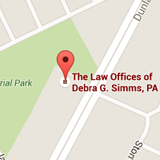
823 Dunlawton Ave. Unit C
Port Orange, FL 32129
Local: 386.256.4882