ESTATE PLANNING PITFALL

A revocable living trust compliments a will and enables your beneficiaries to inherit your wealth upon your death with no need for probate.  But, the trust must be properly funded if it is to do any good.  You must transfer your assets into your trust while you are alive. This means changing legal ownership of your assets from your name to that of the trust.

Bank accounts, stocks, real estate, and even business interests are the type of assets that should be transferred to a trust.  Real estate requires a new deed for the transfer.  It is usually recommended to avoid transferring IRA’s and 401(k) plans to a revocable trust.  This can trigger unwanted tax consequences.

Call the Law Offices of Debra G. Simms at 386.256.4882 to learn more.

This blog post is not case-specific and is provided only for educational purposes and is not intended to provide specific legal advice. Blog topics may or may not be updated and entries may be out-of-date at the time you view them.
 

AGING SOLO?  BUILD A TEAM!

Many of my senior clients live alone – some never married, some are widowed or divorced, and many of my clients never had children or their children are deceased or estranged.  With no family member to rely on, they need someone trustworthy to pay bills and make critical decisions if they become ill.

Here are a few suggestions:

  • Think creatively when selecting someone who can manage your affairs. It might be a cousin or niece or nephew, or maybe a trusted financial or legal advisor.
  • Try to select a health care agent who lives nearby or who can easily travel to you if you are ill. If not family, perhaps a close friend or clergy would be willing to help.
  • Simplify your financial life by consolidating your assets. This makes management easier for you or anyone who takes over.
  • Consult with an attorney about a Living Trust and Durable Power of Attorney. If you do not have a family member or close friend to serve as trustee or agent, talk to your attorney about a financial institution or other professional.  You can name co-trustees, say, a financial institution and a relative or friend, and require them to act together.

What’s most important is – have a plan.  Failure to plan is planning to fail.

Call the Law Offices of Debra G. Simms at 386.256.4882 to learn more.

This blog post is not case-specific and is provided only for educational purposes and is not intended to provide specific legal advice. Blog topics may or may not be updated and entries may be out-of-date at the time you view them.

These deeds are also call “enhanced life estate” deeds.  With a standard life estate deed, you could name a beneficiary to inherit your property while you keep ownership of it for your lifetime, but with significant restrictions.  You wouldn’t have the right to sell or mortgage the property and you might also be liable to the beneficiary you named if you greatly decreased the value of the property – for example, let a house fall into serious disrepair.

By contrast, an enhanced life estate deed (the Lady Bird deed) lets you:

  • Avoid probate of the property
  • Keep the right to use and profit from the property for your lifetime
  • Keep the right to sell the property at any time
  • Avoid making a gift that might be subject to tax
  • Avoid jeopardizing your eligibility for Medicaid

If you have a mortgage on your property, it is advisable to seek the lender’s approval before signing a Lady Bird Deed.  Some mortgage loans have provisions that enable a lender to call a loan due when you execute certain kinds of deeds.

Call the Law Offices of Debra G. Simms at 386.256.4882 to learn more.

This blog post is not case-specific and is provided only for educational purposes and is not intended to provide specific legal advice. Blog topics may or may not be updated and entries may be out-of-date at the time you view them.


 Here at the Law Offices of Debra G. Simms, we provide complete Estate Planning services.  Our revocable trust is not the “one size fits all” document that comes in an expensive leather binder.  We consult with you, assess your situation and prepare your trust to meet your needs and goals.

We will also make sure that your trust is properly funded.  It is not enough to have a piece of paper titled “Trust”;   you must properly title your assets in order to avoid probate.    We will prepare deeds and work with your financial advisors and banks to make sure all assets are titled in the trust.

The initial consultation for Estate Planning services is free.  There is no pressure, no selling and no obligation.  Just education.  Call the Law Offices of Debra G. Simms at 386.256.4882 to learn more.

This blog post is not case-specific and is provided only for educational purposes and is not intended to provide specific legal advice. Blog topics may or may not be updated and entries may be out-of-date at the time you view them.


COMMON QUESTIONS ABOUT ADVANCE MEDICAL DIRECTIVES

  1. Is a designation of health care surrogate the same as a living will?
  • No. A healthcare surrogate is able to make decisions about the medical treatments which are not life support; such as medication, tests, choice of hospitals and physicians.  This allows someone whom you have appointed to express your wishes if you are unable to do so.
  • A living will, on the other hand, applies only to life support treatment for a terminal condition from which you are not expected to recover.
  1. What are some of the other things a health care surrogate can do?
  • Apply for health insurance
  • Sign consent forms
  • Provide information and records when needed
  • Prevent or stop unnecessary tests or medication

If you need advice on estate planning or advance medical directives, call the Law Office of Debra G. Simms today at 386.256.4882

This blog post is not case-specific and is provided only for educational purposes and is not intended to provide specific legal advice. Blog topics may or may not be updated and entries may be out-of-date at the time you view them.

An old saying goes that there are only two things that certain in life – death and taxes.  While neither of these things is anyone’s favorite subject, they both point towards the importance of Estate Planning.

When we talk about Estate Planning, we automatically think about Wills, Trusts, and other types of legal documents.  However, your estate planning documents will do little good if your family or trusted friends do not know where to find them.

Once you have put the finishing touches on your written estate plan, I recommend setting aside some time to talk about it with your family.  Tell them where your documents are kept and explain your wishes clearly.  While this might be an uncomfortable conversation, it can save your family from additional stress and confusion down the road.

If you need advice on estate planning, call the Law Office of Debra G. Simms today at 386.256.4882

This blog post is not case-specific and is provided only for educational purposes and is not intended to provide specific legal advice. Blog topics may or may not be updated and entries may be out-of-date at the time you view them.


FLORIDA PET TRUSTS

What will happen if your pet outlives you?

Many pet owners, like me, consider our pets as part of our family.  But, far too many of us neglect to make long-term plans for our pets.  Each year thousands of animals end up in shelters.  According to a recent Humane Society Report, the majority of dogs and cats that enter shelters are euthanized when the pet parent passes away.

There is something we can do. Florida has a law allowing pet owners to establish a Trust to ensure that their pets receive proper care after disability or death. A Pet Trust works by naming a trusted person or facility to act as Trustee and provides that Trustee with enough money to care for the pet according to your instructions. This can include directions such as your pet’s daily routine, medical care, special food, and socialization.  In short, it may include anything that is reasonable to care for your pets.

You can create a pet trust either while you are alive or when you die by including the trust provisions in your will.

I am an attorney with experience in estate planning and a pet owner who does not want to leave my pet’s future to chance.

If you need advice on estate planning, call the Law Office of Debra G. Simms today at 386.256.4882

This blog post is not case-specific and is provided only for educational purposes and is not intended to provide specific legal advice. Blog topics may or may not be updated and entries may be out-of-date at the time you view them


Create a valid will if you do not yet have one.  A valid will may save your heirs from expensive headaches linked to probate.  A solid will drafted with the guidance of an estate planning attorney will likely cost you a bit more than a “do it yourself will”, but may prove worth the expense.  If you already have a will, review it for needed updates.

Complement your will with other important documents.  This could include a trust, durable power of attorney, medical directive and living will.  These documents can protect you in the event of incapacity or at the end of life.

Review your beneficiary designations. It is a good idea to check the documentation to verify who you have designated as your beneficiaries on retirement plans, annuities, and life insurance.

Create a list of assets and debts.  Organize your personal information and tell your loved ones so they don’t have to follow the trail of bank statements, insurance policies, and bills.  So much of what we do is online so you might want to share your passwords with someone you trust.

Talk to an experienced estate planning attorney.  Do-it-yourself estate planning is not recommended. I have seen many mistakes that have cost families far more than documents prepared by an expert.

If you need advice on estate planning, call the Law Office of Debra G. Simms today at 386.256.4882

This blog post is not case-specific and is provided only for educational purposes and is not intended to provide specific legal advice. Blog topics may or may not be updated and entries may be out-of-date at the time you view them.

More About the Dangers of “Do It Yourself” (DIY) Estate Plans

I once had a widowed client who used an online do-it-yourself will that failed to mention what would happen if his only son predeceased him. Well, that is what happened.  And, because this son did not have any children, I advised my client that if he didn’t update his will, his assets would then pass to his “heirs” at law.  In his case, this meant a niece and nephew.  He had no relationship at all with these folks.

We updated the will and my client named a close friend and made some charitable bequests. That is the reason to have an attorney assist you with this process. We know the questions to ask, and we know what to do with the answers.

Also, without a lawyer advising you, you might not understand the terms in your documents.  This can be dangerous.  For example, a Durable Power of Attorney essentially gives someone else (the “agent”) the power to take care of your finances if you become incapacitated.  Without understanding all the terms in the document, you could inadvertently give someone more power than you want to when creating a durable power of attorney.  If that person isn’t trustworthy, he or she could steal from you. It happens all the time.

Another problem with DYI documents is that if the document isn’t executed properly—in Florida, you need 2 witnesses and a notary to your signature in a Durable Power of Attorney—then the document will not even be valid.

A lawyer with expertise in estate planning can end up saving you and your family lots of money.  It is very sad when families call me after a loved one has become incapacitated or dies and there are mistakes in the documents.  By then, it’s too late.

If you need advice on preparing such documents, call the Law Office of Debra G. Simms today at 386.256.4882

This blog post is not case-specific and is provided only for educational purposes and is not intended to provide specific legal advice. Blog topics may or may not be updated and entries may be out-of-date at the time you view them.


As an attorney working with elders and their estate plans, I discuss my clients’ wishes for burial or cremation.  I always encourage my veteran clients, as part of their estate planning, to plan in advance to make things easier on their family when they pass away.

Burial benefits for veterans are administered by the National Cemetery Administration of the U.S. Department of Veteran’s Affairs.  Burial benefits include, at no cost to the family: a gravesite in a VA national cemetery with available space, opening and closing of the grave, perpetual care of the gravesite, a government headstone or marker, a burial flag, and a presidential memorial certificate.  “Burial” includes cremation and all other legal methods of disposing of remains.

Many veterans choose not be buried in a VA cemetery.  What they often fail to realize is that they can still be eligible for VA burial benefits. A veteran can get a government-furnished headstone or marker to be placed in a private cemetery or a veteran can obtain a medallion to be affixed to an existing headstone.  The cost of placing or setting the marker is not covered by the VA.

The VA will also pay a burial allowance for the plot or other expenses, such as transportation of remains.  The entitlement and amount of the payment depends upon whether the death is service related, whether the veteran died while hospitalized in a VA hospital, and whether the veteran is entitled to or is receiving VA compensation or pension.

If you are a veteran, contact the Department of Veteran’s Affairs to determine whether you have a claim for burial benefits.  You can visit your area service office or apply online at:

https://www.vets.gov/burials-and-memorials/application/530/introduction

If you need advice on your last wishes, call the Law Office of Debra G. Simms today at 386.256.4882

This blog post is not case-specific and is provided only for educational purposes and is not intended to provide specific legal advice. Blog topics may or may not be updated and entries may be out-of-date at the time you view them.


Contact Us

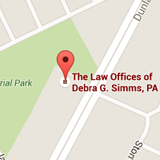
Port Orange Office:
Prestige Executive Center
823 Dunlawton Ave. Unit C
Port Orange, FL 32129
Local: 386.256.4882