

Digital Afterlife

social media when your deadI heard a really interesting program on National Public Radio tonight. It featured Evan Carroll and John Romano who have written a book called Your Digital Afterlife.  I had been wondering what happens to all my e-mails after I’m gone.  Sometimes, I dwell on the macabre.
Answering the question posed above, the authors say, “This is a simple question and we wish there was a simple answer. Unfortunately there isn’t a standard way that Internet users can expect service providers to handle their accounts after death. Every provider is different.”
I will be researching estate planning for our “digital afterlife”, but in the meantime, here is a rundown on the most popular sites:
Facebook‘s privacy policy states that your heirs can request that your account be deleted or “memorialized.” Memorialized profiles restrict profile access to confirmed friends and allow friends to write on the user’s Wall in remembrance.  Anyone can request that it be memorialized by simply notifying Facebook and showing a death certificate or a news article that indicates your death.
Gmail’s help documents outlines the steps to gain access, which include a death certificate, an email you have received from the account in question, and proof that you have legal authority over the estate.
Twitter‘s help documents tells us: “If we are notified that a Twitter user has passed away, we can remove their account or assist family members in saving a backup of their public Tweets”.  Your heirs need to provide their contact information, their relationship to the deceased user, the username of the account or a link to the profile page, and a link to the obituary. Twitter also offer survivors an archive of the user’s public Tweets.

YouTube‘s policy is pretty simple – fax or mail the representative’s contact information, a copy of the death certificate, a copy of the document that gives the representative authority, and access to the account will be given.

Yahoo is a different story. Yahoo (which owns services like Flickr and Delicious) has a terms agreement that says there is “No Right of Survivorship” and that accounts are “Non-Transferable.” Upon receipt of a copy of a death certificate, your account may be terminated and all contents permanently deleted.  You might want to instruct your executor or personal representative to archive your Yahoo account before the death certificate is presented.

Debra G. Simms
To contact attorney Debra G. Simms, P.A. in Port Orange or New Smyrna Beach, FL please call 877.447.4667.

Baby Boomer Living Will

Many of us Baby Boomers have parents reaching the end of their lives.  Some of us know what our parents want when they reach the end, but many of us have not had this discussion with our families.  It’s hard.  For us.  For them.
One of the most important decisions we can make in advance is whether or not we want to prolong life artificially if we are at an end stage of life.  We can make this decision legal and binding if we have a Living Will.
A properly drafted Living Will will state your advance directive about whether you want to prolong life after your doctors have determined that there is no probability of recovery.  In Florida, this applies when you are in a terminal condition, vegetative state, or end-stage condition.  A properly drafted Living Will should also direct whether or not you desire a feeding tube or hydration to keep you comfortable.
Yes, these are all wrenching decisions.  But, without a Living Will, the health care system cannot “pull the plug”.
For our parents and for us baby boomers, actually no matter your age, it is much more preferable to make your wishes known by having an appropriate Living Will.
Please contact our office for a consult on a Living Will.  Don’t do it yourself.  The forms on line are often ineffective because they are too vague or they try to cover every possible medical contingency.  And every state has specific statutory language required for a valid Living Will.
Contact the Law Office of Debra G. Simms for your consultation on Living Wills and other Advance Directives.
Don’t wait until it’s too late.
Toll free: 1-877-447-4667
Debra G. Simms
To contact attorney Debra G. Simms, P.A. in Port Orange or New Smyrna Beach, FL please call 877.447.4667.

Chapter 7 Bankruptcy

3020812270_5e72fd474b_mOur Federal Court has come through for homeowners who have second mortgages or Home Equity Loans where their home is not even worth what is owed on the first mortgage!  Homeowners who have such mortgages can get rid of them in Chapter 7 Bankruptcy!
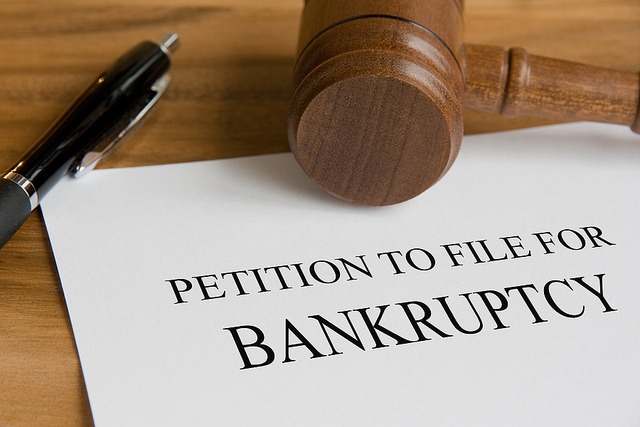
This is called “stripping off” an unsecured lien.  Prior to the recent case of In re McNeal, just decided on May 11, 2012, debtors could only strip off a second mortgage in Chapter 13 Bankruptcy, an option just not viable for many homeowners with little disposable income.
This is the first circuit level court to reach this holding.  But beware: this decision is subject to reversal on rehearing.  If you are contemplating such an action in order to save your home, act now while the Middle District of Florida is bound to follow this new law.  In a month or two, it may be too late.
Call the office of Debra G. Simms for your bankruptcy and debt relief consultation.  We have represented consumers for 25 years.
We now serve Central Florida in Orlando, and Daytona Beach.
Call us toll free at 1-877-4667.
Orlando Office: 407-331-4LAW.
Act Now!
Debra G. Simms
To contact attorney Debra G. Simms, P.A. in Port Orange or New Smyrna Beach, FL please call 877.447.4667.

Estate Tax Rules

The federal estate tax is scheduled to return with a vengeance on Jan. 1, 2011, imposing a tax of up to 55% on estates valued at more than $1 million.

A $1 million exemption would affect a lot of families who do not consider themselves “wealthy”. “If you have a home, an IRA or 401(k) retirement account, life insurance and some other savings you can get to $1 million pretty easily.

The roots of the estate tax disarray date back to 2001, when Congress voted to gradually raise the estate tax exemption while cutting income tax rates. The phase-out ended in repeal of the tax in 2010. But like the Bush administration’s income tax cuts, the reduction in the estate tax is scheduled to expire at the end of this year.

Historically, wealthy individuals have used a variety of strategies to mitigate estate taxes, including giving away a large portion of their wealth while they’re still alive.  But this strategy isn’t practical for families who have most of their wealth tied up in their primary residences and retirement savings.

Estate taxes can be minimized with the use estate planning devices such as marital trusts and for unmarried individuals, irrevocable life insurance trusts.

Contact our office today to discuss your estate planning options to help you minimize the impact of the new tax law.

Debra G. Simms
To contact attorney Debra G. Simms, P.A. in Port Orange or New Smyrna Beach, FL please call 877.447.4667.

8268391500_e15e941452_zThis time of year many of my clients are considering bankruptcy.  They have held off as long as possible and now that the holidays are over, they know they need some debt relief.  The most frequent question asked is: How badly will bankruptcy affect my credit score?

Even after 23 years of practicing law, I have a hard time answering that question.  Folks want quantitative answers.  But even though they seem based on a logical arithmetic equation, credit scores are funny things. The calculation is a mystery, as is some of the logic behind it. The formula is a secret of the companies who generate the scores!

Credit scores are fluid

We do know that if we pay our bills on time, our score will be good. If we do not, it will be bad. Credit scores are fluid. They go up and down constantly, and some of the triggering events aren’t even reflective of our credit worthiness.  For example, have you ever looked at your credit score after applying for and receiving a new credit card at the check-out lane (so you can get that 10% discount?)  You got the new card because your credit is good.  But, getting the new card causes your score to drop!  Ever been told by a mortgage broker that you have too many recent credit inquiries on your report?  Well, of course you do!  You have been shopping around for the best mortgage rates!

Considering bankruptcy?

So, should you care that your credit score will be affected by a bankruptcy?  My answer is no.   Credit scores, in and of themselves, are meaningless. Your score does impact your ability to get credit and that which the credit buys you (the new home, new car, new clothes, etc.), but really, folks, do you want more credit right now?  Actually, bankruptcy might even help your score – in the long run.  Let me explain.
If you can’t pay your bills on time, your credit score will continue to decline and the decline will continue as long as you struggle (and fail) to pay all your debts.  On the other hand, if you file bankruptcy, your credit score will be impacted initially, but once your bankruptcy case is closed and you begin to reestablish good payment history, your score will start to improve faster than if you continue struggling (and failing) to pay the bills you cannot now afford.
If you are in the central Florida area near and around Orlando or in The Villages and would like to schedule a consultation with me, feel free to call Toll free at 1-877-447-4667.
Debra G. Simms
To contact attorney Debra G. Simms, P.A. in Port Orange or New Smyrna Beach, FL please call 877.447.4667.

The holidays are over and it’s time to get back to reality!  Many of us have made New Year’s resolutions to manage our money better and some of us even mean it!

Living off of credit cards

In my law practice, I have been seeing a lot of folks who have been living off of credit cards.  They just can’t do it anymore.  Sometimes they can’t manage the minimum payments, or the credit limit has been used up, or in many cases, they just can’t handle the stress anymore.  These people need relief!

Here is my New Year’s list of reasons to consider filing for bankruptcy.  If you are in any of these situations, please contact my office for a CONSULTATION.  It doesn’t cost anything to ask.
 
    • You are being sued by  a creditor.
    • Your home is in foreclosure.
    • You have lost your job and haven’t found new or similar employment.
    • You have had a decrease in income, but not a decrease in expenses.
    •  You have overwhelming medical or credit card debt.
    • You are struggling to pay for your home or vehicle.
    • Your credit card minimum payments have increased because the company just raised the interest rate even though you have been faithfully and painfully make the minimum payments.
    • You don’t have any more credit.

Chapter 7  vs Chapter 13 Qualifications

When you visit our offices for BANKRUPTCY LAW CONSULTATION, I will explain the bankruptcy process to you.  I will determine if you qualify for a Chapter 7 which is simple, inexpensive, and results in the discharge of almost all unsecured debt.  When debt is discharged, you no longer have to pay it.  A typical Chapter 7 case takes about 4-6 months to go through the court system.

I will also explain a Chapter 13 to you.Chapter 13’s are designed for people who make too much money for a Chapter 7 or for people who are trying to get caught up with payments on collateral such as a home or a car. In a Chapter 13 bankruptcy, people make payments over a 3-5 year period to a bankruptcy trustee who pays the money to creditors. All unsecured debts are then discharged.

A lot of people are worried about whether they can keep their home, furniture or cars if they file for bankruptcy.  Generally, in Florida the law allows for complete protection of your home and provides exemptions to cars and other property, depending on the value.

Financial problems are stressful.  Don’t wait for it to get worse. Contact Florida Bankruptcy Attorney Debra G. Simms today for help with your case

To contact attorney Debra G. Simms, P.A. in Port Orange or New Smyrna Beach, FL please call 877.447.4667.

Debra G. Simms

Florida Alimony Reform (FAR) Update

TAVARES, Fla., March 12, 2012 (GLOBE NEWSWIRE) — Florida Alimony Reform (FAR), the state’s leading alimony reform organization, and the largest such group in the country, today vowed to press on fighting to update Florida’s antiquated alimony laws, despite the Senate’s failure to bring the House-passed reform bill, HB 549, to the floor last week, in the final week of the legislative session.

“I’m hugely disappointed on behalf of our members,” said the group’s spokesman, Alan Frisher, a Licensed FinancialAdvisor and Certified Divorce Financial Analyst (CDFA). “After the House passed the bill that we supported, by a vote of 83 to 30, I expected the Senate to follow suit. But our opposition had another plan.”

The effort’s primary opponent is the Florida Bar Association’s Family Law Section, headed by attorney David Manz. Last week in the New York Times, Mr. Manz was quoted as saying that alimony reform advocates are a “very vocal, persuasive minority.”

“Florida is very much behind the times in its alimony laws,” said Mr. Frisher. “And despite opposition from the Family Law Section, many Florida divorce lawyers know this and believe there should be serious revisions to current law.”

Mr. Frisher accepted part of Mr. Manz’s description and took issue with part. “We are vocal indeed, because the state’s permanent alimony laws are backwards, out-of-touch and hugely unfair to everyone in this picture but the lawyers. As far as being a minority, every divorce affects the entire family, and when alimony never ends and payers lose their houses and go bankrupt because they can’t afford their payments, the consequences are devastating to children, grandchildren, stepchildren and new spouses. Even when circumstances are not that dire,” Mr. Frisher continued, “the animosity between ex-spouses over lifetime alimony is terribly destructive.”

FAR Law Factors Now Considered

FAR intends to support future legislation that will end permanent alimony and replace it with alimony based on the length of the marriage and the income of the parties, as the new law does in Massachusetts. The emphasis will be on generous transitional alimony for the lower earner, with the goal of making lower earners self-sufficient, as is the case in most states throughout the country.

In addition to limiting alimony, FAR supports provisions that would lower or end alimony when a recipient is cohabiting for an extended period. Under current law, cohabiting ex-spouses may collect alimony until death, even if they are living permanently with new partners. FAR also supports establishing a meaningful right to retire, so that alimony payers are not forced to work until death to make their payments, as they are now, even after divorced couples have divided marital assets and given the lower earner assets, pensions, and the Social Security payments that all lower earners receive after ten years of marriage.

For more on FAR’s efforts to bring Florida’s alimony laws into the 21st century, please visithttps://www.myfloridalaw.com/alimony/florida-alimony-reform/.

The Florida Alimony Reform logo is available athttp://www.globenewswire.com/newsroom/prs/?pkgid=11350

Debra G. Simms
To contact attorney Debra G. Simms, P.A. in Port Orange or New Smyrna Beach, FL please call 877.447.4667.
Lately, I have been talking to a lot of folks who are considering hiring debt consolidation companies. Those of you who have already consulted with me or have read my blog on this subject (November 2, 2010) already know what I am going to say …Don’t do it!

3020812270_5e72fd474b_mChapter 13 bankruptcy vs. Consolidate debt

For those of you who want to consolidate your debt,  the better option can be Chapter 13 bankruptcy. Not only does the law provide that your debts be consolidated and reorganized in a Chapter 13 plan, but Chapter 13 allows you to reduce the amount you owe on certain secured debts to the value of the collateral.
For instance, if you owe $20,000 on a car that is only worth $10,000, you can reduce the debt to only $10,000 and pay off that amount in equal installments over the life of your 13 repayment plan. This strategy is called a “cramdown.”Doing this allows you to keep your car and be able to afford the payments in your plan.
You can’t cramdown mortgage liens on your home, but what you can do is “strip off” a second or even third
mortgage and treat it as an unsecured debt in your Chapter 13 plan. This might be an option if the current market
value of your home is less than what you owe on your first mortgage (“underwater”) leaving no equity to secure the
second or third mortgage.
This procedure allows you to greatly reduce the amount you have to pay each month to stay current on your
home. For example, assume you pay $1,500 on your first mortgage, $750 on your second, and $400 on your third
(this might be a home equity loan). If your home is worth $200,000 and you owe at least that much on your first
mortgage, you can strip off the second and third mortgages. This would reduce your monthly mortgage payment from
$2650 to $1,500.
Sounds good, doesn’t it?  Better than paying a debt consoldation company AND still end up losing your home?
At the Law Office of Debra G. Simms, we offer bankruptcy consultations.  What have you got to lose?
Debra G. Simms
To contact attorney Debra G. Simms, P.A. in Port Orange or New Smyrna Beach, FL please call 877.447.4667.

Florida Housing Market Crash

florida foreclosure lawyerIt’s old news that the financial crisis and the housing market created devastating consequences for homeowners and communities throughout the country. Workers who have lost their jobs or had their hours cut are struggling to stay current on their mortgage payments. Refinancing to lower mortgage rates is not an option for even those with a steady income because in many cases the property isn’t worth what’s currently owed. Millions of families are expected to face foreclosure and bankruptcy in the next several years.

Homeowner’s Affordable Modification Program (HAMP)

In the meantime, it has been reported that the Obama Administration’s ambitious Homeowner’s Affordable Modification Program (HAMP), implemented to offer assistance to as many as 7 million homeowners, has reached only a few hundred thousand families and only on a temporary basis.

Adding insult to injury, last month the U.S. House of Representatives defeated the so called “cram down” provision to a financial reform package that would have temporarily allowed bankruptcy judges to adjust the value of a mortgage to reflect the current value of the home.
Maybe Washington will help us after all. Last night, in his State of the Union address, President Obama pledged in one simple sentence in an entire speech, “This year, we will step up refinancing so that Homeowners can move into more affordable mortgages.” Now, that’s good news, right?
The Supreme Court of Florida, at least, is forcing the banks to talk to their customers before they can foreclose on their home. A new administrative order mandates mediation in every foreclosure case and requires that a representative from the bank, not just their lawyer, actually be there to talk. This is good news, right?
Debra G. Simms
Need a foreclosure lawyer? To contact attorney Debra G. Simms, P.A. in Port Orange or New Smyrna Beach, FL please call 877.447.4667.
divorce lawNew legislation proposed in the Florida House of Representatives would significantly alter many provisions of Florida’s existing alimony laws. The bill’s big changes could affect people going through divorce after the law is enacted as well as people with alimony orders going back as far as 12 years.
Existing Florida Alimony Laws When Getting a Divorce

Currently, when a married couple gets divorced in Florida, a judge may grant alimony, sometimes known as spousal support, to either former spouse. In deciding whether to award alimony, Florida law requires judges to make factual determinations as to whether either person has an actual need for alimony and whether either person has the ability to pay it.

If so, the judge will award a type and an amount of alimony based on these factors listed in Florida statute:

    • The standard of living established during the marriage.
    • The length of the marriage.
    • The age and physical and emotional condition of each person.
    • The financial resources of each person, also considering the division of marital property.
    • The earning capacities, education, vocational skills and employability of each person as well as the time necessary for each person to acquire education or training sufficient to find appropriate employment.
    • The contribution of each person to the marriage, including services rendered in homemaking, child care, education and in support of the other person’s career.
    • The child-care responsibilities of each person regarding minor children they have in common.
    • The tax treatment of paying and receiving alimony.
    • All sources of income available to each person.
    • Any other factor necessary to do equity and justice between the parties.

Types of Florida Alimony

Florida Statutes also define four types of alimony, which may be combined in any form.

The first type is bridge-the-gap alimony, which may be awarded to support one former spouse in the transition from being married to being single. It is intended to help with legitimate, identifiable short-term needs, and it may not be awarded for a period longer than two years. Bridge-the-gap alimony awards are not modifiable, and the obligation to pay this type of support ends on the death of either former spouse or when the person receiving the alimony remarries.

The second type is rehabilitative alimony, which may be awarded to help a person become capable of self-support after divorce through the redevelopment of previous skills or credentials or the acquisition of education, training or work experience necessary to develop employment skills. Before rehabilitative alimony is awarded, a specific rehabilitative plan must be created. Florida statute states that rehabilitative alimony orders may be modified or terminated upon a substantial change in circumstances or upon failure to follow or completion of the rehabilitative plan.

The third type is durational alimony, which may be awarded to provide economic assistance to a former spouse for a set period of time after the dissolution of a marriage of less than 17 years. The amount awarded may be modified or terminated if there is a substantial change in circumstances, the duration of the award cannot be changed except under exceptional circumstances, and it cannot exceed the length of the marriage. Durational alimony terminates if a former spouse dies or if the recipient remarries.

Finally, permanent alimony may be awarded to provide for the needs and necessities of a former spouse’s life as they were established during the marriage. An award of permanent alimony is somewhat rare except following marriages that lasted 17 years or more. Permanent alimony awards may be modified or terminated if either former spouse dies, there is a substantial change in circumstances, or if the recipient remarries or is in a “supportive relationship” with another person as defined by Florida law.

Proposed Changes to Florida Alimony Law

The changes proposed in House Bill 549 would considerably alter Florida alimony. Perhaps most noteworthy, the bill would cap all alimony payments at a maximum of 20 percent of the payor’s average monthly net income over the last three years of the marriage. Also, the obligation to pay alimony would end when the payor reaches retirement age, even if he or she may continue to work.

The bill also would eliminate permanent alimony and replace it with long-term alimony for 60 percent of the duration of the marriage except in limited circumstances. In addition, it would make bridge-the-gap alimony modifiable, reduce the period of durational alimony to half the length of the marriage and increase the definition of a long-term marriage to 20 years or longer.

The proposed legislation states that the alimony award “may not leave the payor with significantly less net income than the net income of the recipient” unless exceptional circumstances exist. Further, when evaluating the financial resources available to each person, only assets and debts acquired during the marriage would be considered.

These possible changes could result in significantly lower alimony awards. Because the bill would prohibit consideration of the standard of living established during the marriage as a factor in determining alimony amounts, there could be much less alimony awarded to someone who married a spouse with significant assets coming into the marriage. The bill also would remove consideration of equity and justice when determining alimony amounts, which may limit the ability of judges to tailor awards to the unique circumstances of each case.

Another possible result would be greater flexibility to modify alimony awards. Conceivably, the 20 percent limitation would allow people paying alimony to modify the amounts if their economic situations change, such as losing a job or owning a business that has drastically lost revenue in the recession.

Finally, the proposed legislation also would open the door to re-evaluation of existing alimony awards, which may be revisited for possible modification under the new rules. If you are going through divorce or have an existing alimony award, contact my office for a consultation to learn how the proposed law might affect you!

Debra G. Simms

Contact Us

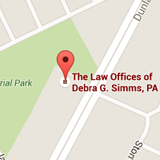
Port Orange Office:
Prestige Executive Center
823 Dunlawton Ave. Unit C
Port Orange, FL 32129
Local: 386.256.4882